
On the EV charger vs 240V outlet question, the two are not rivals so much as different parts of the same Level 2 setup: the outlet is the power source, and the charger is the electric vehicle supply equipment that controls the current. [1][2] A granny charger is the slow path, a Level 1 cord that plugs into a standard 120V household outlet. [3][2]
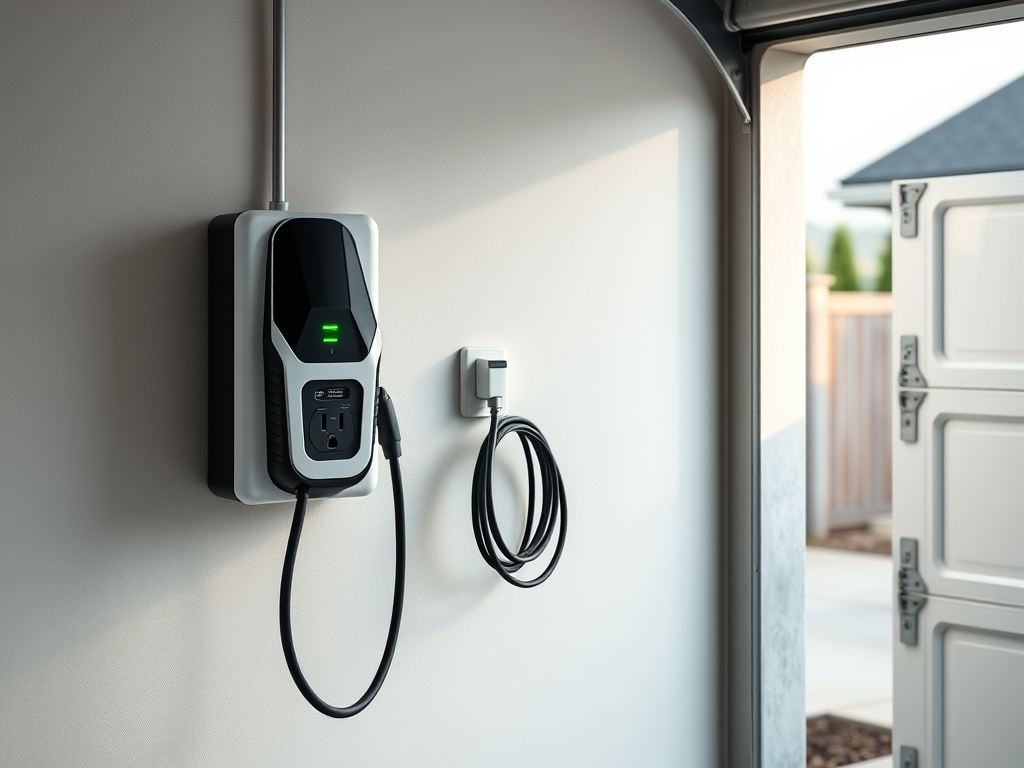
What is the real difference between a dedicated charger and a 240V outlet?
A 240V outlet does not charge a car by itself. Level 2 equipment uses 240V residential service and is common for home, workplace and public charging. [3] The charger supplies AC power to the car’s onboard charger, which converts it to DC for the battery. [1] The EPA puts it plainly: Level 2 uses a 240V outlet, and you will need additional equipment. [2]
That additional equipment is the EVSE. It can be a plug-in unit that uses an existing outlet or a hardwired unit on a dedicated circuit. The car’s onboard charger also limits what the car can accept. [1]
If you already have the right 240V outlet in the right place, you may only need a compatible Level 2 charger; if not, an electrician has to add the circuit. [2]
How much slower is a granny charger or 3-pin plug?
Level 1 charging uses a common residential 120V AC outlet, according to the U.S. Department of Transportation. [3][2] Level 1 can take 40–50+ hours to charge a battery-electric vehicle to 80 percent from empty, or 5–6 hours for a plug-in hybrid. [3] The EPA estimates about 5 miles of range per hour and says many people with commutes under 40 miles a day find Level 1 sufficient to charge overnight. [2] A federal overview gives a wider 2–5 miles per hour depending on conditions. [3]
Level 2 is the step up: 4–10 hours for a BEV to 80 percent and 1–2 hours for a PHEV. [3] Range per hour is typically 10–20 miles in that overview [3], while the EPA lists about 25 miles per hour of charging [2] and ENERGY STAR lists 10 to 30 miles depending on conditions. [4] The practical test is your daily mileage and how long the car sits. If the car is parked for many hours and your daily driving is modest, Level 1 can work. If you need a full battery every morning or drive beyond the Level 1 range, a 240V circuit and Level 2 charger is the better fit.
What does installing a 240V outlet or charger involve?
A qualified electrician can install a new 240V outlet and Level 2 charger, determine whether the home has sufficient capacity, and tell you whether the electrical panel needs an upgrade. [2] ENERGY STAR’s pre-wiring guidance lists the sequence: determine the charger type, choose the location, check the home’s electrical capacity, and schedule installation. [4]
The circuit is not the only consideration. The charger, outlet or hardwired connection, breaker and wiring all have to match. A plug-in charger needs the correct outlet type; a hardwired charger is connected directly and does not use a plug. [2] If you are pre-wiring before you buy an EV, ENERGY STAR suggests installing the wiring now and waiting to buy the charger so you can choose a newer model later and potentially take it with you if you move. [4]
Panel capacity is the part to settle early. Some Level 2 chargers include load management that adjusts charging to what the panel can handle, which is worth asking about if your electrician flags a tight service. [5] That does not replace the electrician’s inspection; it is a feature to compare alongside the circuit requirements.
Do you need a smart charger, and which connector?
A basic Level 2 charger will recharge the car; smart features are optional. Smart scheduling, home energy monitoring and solar charging integration are features some chargers list. [5] Home charging can let owners use off-peak electricity rates by charging at night. [6] An ENERGY STAR certified charger is about 40 percent more efficient than a standard model, according to EPA’s consumer guide. [4]
Connector type is the first compatibility check. Lenz says most home chargers work with any EV that uses the standard J1772 connector, except a Tesla, which has its own type of connector. [6] The major standards include SAE J1772, IEC 62196, CCS, CHAdeMO, China’s GB/T and Tesla’s NACS. [1] Match the charger to the car’s inlet, then choose a plug or hardwired installation.
Options at a glance
| Brand | What they offer | Worth knowing |
|---|---|---|
| Emporia | Level 2 Classic and Pro chargers; up to 48A hardwired; 25 ft cable; NEMA plug or hardwire; 3-year warranty; smart scheduling, home energy monitoring and solar charging integration; the Pro adds PowerSmart load management. [5] | Emporia says the Classic was named Best Smart EV Home Charger by MotorTrend and cites 98.9% field reliability; check availability in your region. [5] |
| Lenz Charging | Lenz describes its W401 Level 2 home charger as drawing AC from a 240V outlet or the home’s electrical system; it also lists a UL-compliant EV charging ready receptacle, a NACS Supercharger to CCS1 adapter, and U.S.-based customer support. [6][7] | The site positions Lenz around charging products and accessories that are safety certified; check the connector and adapter fit for your car. [7] |
| Lectron | Level 1 and Level 2 chargers; NEMA 5-15 and NEMA 14-50 plugs; hardwired and plug-in options; Tesla/NACS and J1772/CCS adapters; examples include a 48A 240V hardwired NEXUS L2 and a portable L1/L2 unit rated 8–40A at 120/240V. [8] | The U.S. site covers both granny-charger-style Level 1 cords and Level 2 home charging, so the plug type and connector are the main compatibility checks. [8] |
Which option fits whom
- Short daily commute and a standard outlet near the car: a granny charger may be enough. The EPA says many people with commutes under 40 miles a day find Level 1 sufficient to charge overnight. [2] This path needs the least equipment because some automakers provide a charge cord with the vehicle. [2]
- Longer daily drive or a full battery needed every morning: a 240V circuit plus a Level 2 charger is the practical setup. Level 2 can add 10–30 miles of range per hour depending on conditions. [2][4]
- You already have a 240V outlet: choose a plug-in Level 2 charger that matches the outlet. Lectron lists NEMA 14-50 plug-in Level 2 chargers among its models. [8]
- Tight electrical panel: ask an electrician about load management. Emporia’s Pro charger includes PowerSmart load management that adjusts charging to what the panel can handle. [5] Confirm with the electrician that the feature is acceptable for your service.
- You want one charger for home and travel: Lectron lists a portable L1/L2 charger rated 8–40A at 120/240V. [8]
- You need Tesla/NACS or J1772/CCS compatibility: check the connector first. Lenz lists NACS and CCS adapters, and Lectron lists both Tesla/NACS and J1772/CCS chargers and adapters. [7][8]
- You want U.S.-based support: Lenz says it has a U.S.-based customer support team. [7]
- You are pre-wiring before buying an EV: install the wiring and wait on the charger, as ENERGY STAR suggests, so you can choose a newer model later. [4]
Before buying, confirm the connector, outlet or hardwire requirement, load-management approval, and current product details on each brand’s site.
Sources
- Charging station (Wikipedia) — Wikipedia
- Title: Plug-in Electric Vehicle Charging: The Basics | US EPA — epa.gov
- Title: Charger Types and Speeds — transportation.gov
- Title: U.S. EPA Consumer Messaging Guide for ENERGY STAR Certified Electric Vehicle Charge — energystar.gov
- Emporia official site — shop.emporiaenergy.com
- Lenz Charging official site: Title: EV charging accessories: Your ultimate guide to an EV — lenzcharging.com
- Lenz Charging official site — lenzcharging.com
- Lectron official site: Title: EV Chargers: Portable & Home Charging Stations — ev-lectron.com
How we put this together: we compared these options using each brand's published product and policy pages and the references listed above. We haven't tested the products ourselves, and details such as prices and policies can change, so check the brand's site before you buy.