
The short answer: choose the EcoFlow solar generator by the load you actually need to keep running, not by the biggest number on the page. EcoFlow’s own lineup runs from a 1 kWh, 1,800 W station, the DELTA 3 Classic, up to a 12 kWh, 12 kW whole-home unit, the DELTA Pro Ultra X [1][2]. Jackery’s warranty terms are similar to EcoFlow’s.ry covers much of the same ground with its HomePower and Explorer models [3]. Settle capacity, output and whether you need 240V first; brand comes second.
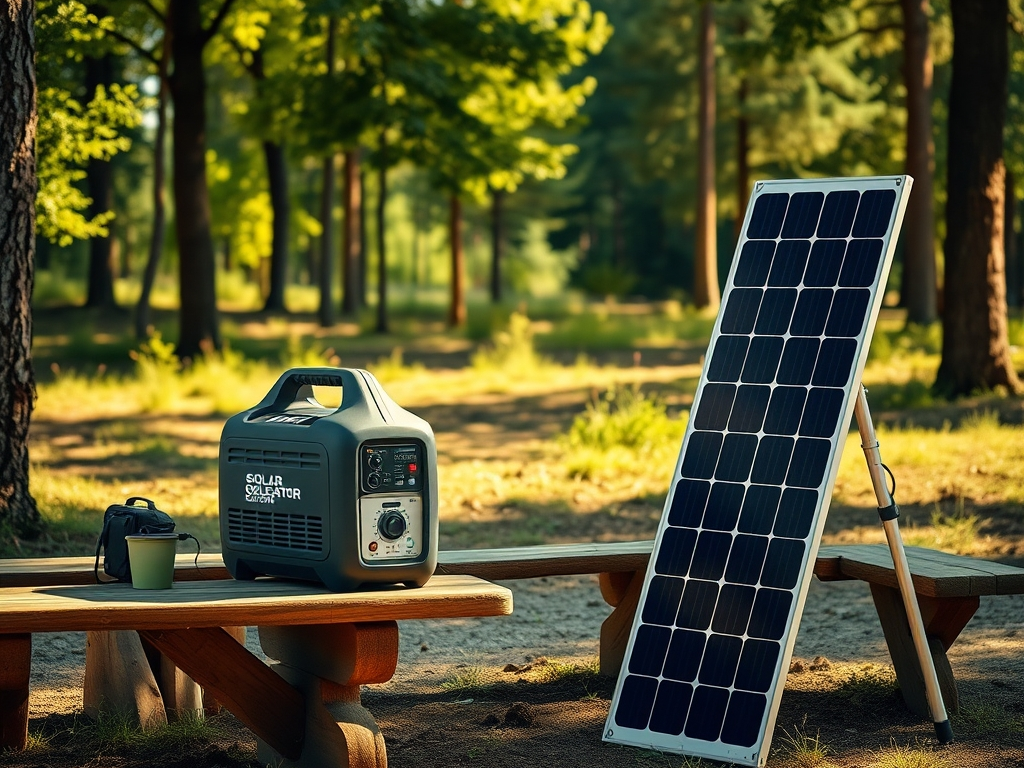
What should you work out before choosing a model?
A solar generator is a battery, a charge controller, an inverter and solar panels bundled into one portable unit, with the battery usually lithium-ion or lithium iron phosphate (LiFePO4) [4]. That means three numbers decide the model, not the marketing name.
Capacity in watt-hours (Wh) sets runtime. Divide the station’s capacity by an appliance’s running wattage to estimate hours, then discount for real-world losses and for the fact that most appliances cycle on and off rather than run flat out.
Continuous output in watts sets what you can run at once. A station that lists 1,800 W continuous will not carry a device that draws more than that, no matter how much capacity it has.
Surge output matters for motors. EcoFlow says its X-Boost technology lets its solar generators surge to 6000 W to support higher-draw appliances [2].
Then ask two practical questions. Do you need 240V for a well pump, dryer or central air, or is 120V enough for a fridge, lights, router and phones? And do you want to add batteries later, or buy the capacity once? EcoFlow’s whole-home units are sold on expandability, from 6 kWh up to 30 kWh on the DELTA Pro Ultra and 12 kWh up to 61 kWh on the DELTA Pro Ultra X [2].
Which EcoFlow series fits your job?
The published specs on EcoFlow’s solar generator collection sort the lineup fairly cleanly [2][1].
For essentials and portability, the DELTA 3 Classic is listed at 1 kWh capacity and 1,800 W output, while the DELTA 3 Plus runs 1–5 kWh at 1,800 W, and the DELTA 3 Max Plus is listed at 2 kWh and 3,000 W output with a 0–80% charge in 96 minutes [1][2]. Above that, the DELTA 3 Ultra carries 3,072 Wh and 3,600 W output with 800 W of solar input, and the DELTA 3 Ultra Plus matches the 3,072 Wh capacity but expands to 11 kWh and accepts 1,600 W of solar [2].
For whole-home backup, the DELTA Pro is listed at 3,600 Wh expandable to 10.8 kWh with 3,600 W output, the DELTA Pro 3 at 4,096 Wh expandable to 12 kWh with 4,000 W output and both 120V and 240V output from a single unit, and the DELTA Pro Ultra at 6,144 Wh expandable to 30 kWh with 7,200 W output [2][1]. EcoFlow says the DELTA Pro Ultra is certified to both UL1973 and UL9540 [1].
The RIVER series is where the company started, launching with the RIVER mobile power station in 2017 and adding smart energy management features with the 2020 RIVER series [5]. The site’s product menu lists RIVER alongside DELTA, so check those product pages directly for capacity and output figures if you want the smallest unit in the range [1].
EcoFlow also states that its solar generators use LFP batteries, carry a five-year warranty, and run a battery management system that monitors 40 safety indicators around the clock [2].
Delta 3, Delta 3 Classic, or Delta 3 Ultra?
The names are close but the numbers are not. The Classic is the entry point at 1 kWh and 1,800 W [1]. The Plus buys you expandable capacity from 1 kWh to 5 kWh at the same 1,800 W output [1]. The Max Plus steps output up to 3,000 W and charges to 80% in 96 minutes [2]. The Ultra and Ultra Plus both sit at 3,072 Wh and 3,600 W, but the Ultra Plus adds expansion to 11 kWh and double the solar input at 1,600 W [2]. If your list includes a fridge plus a few room circuits, the output figure is what separates these models; if it includes a window air conditioner or a pump, look at surge ratings before anything else.
How does EcoFlow compare with Jackery?
Jackery’s solar generator range starts small and ends large: the 300 Plus at 288 Wh with a LiFePO4 battery, the 1000 v2 at 1,070 Wh, the HomePower 1000 v2 at 1,024 Wh and 1,500 W, the 2000 v2 at 2,042 Wh, the HomePower 2000 Plus v2 at 2,048 Wh and 2,400 W, the HomePower 3000 at 3,072 Wh and 3,600 W, the HomePower 3600 Plus at 3,584 Wh and 3,600 W, and the 5000 Plus at 5,040 Wh and 7,200 W with 120V/240V output [3].
Jackery says its panels use monocrystalline cells with an efficiency rate of 25%, that its stations can recharge three ways, and that it offers 30-day returns with up to five years of free warranty [3]. The company also states 7 million-plus units sold and recognition from more than 200 media outlets [6]. EcoFlow cites up to 25% conversion efficiency for its TOPCon panels and 99% MPPT efficiency, plus five-year warranty coverage [2]. On the warranty and panel-efficiency numbers the two brands land in the same place; the difference shows up in model spread and in how each brand structures its bundles.
Return terms are worth reading closely. EcoFlow’s return service is currently available for US orders only, covers items returned complete in original packaging within 30 days of receipt, and allows a full refund on cancellation within 24 hours of ordering [7]. EcoFlow’s US store also states it does not ship to outlying areas including Puerto Rico, Hawaii and Alaska [1].
Does the panel bundle change the answer?
Yes, because recharge time depends on panel wattage as much as on the station. EcoFlow sells its solar generators as bundles with specific panel counts, such as two 400W panels with the DELTA Pro Ultra and four 400W panels with the DELTA Pro Ultra X, and notes that its fastest full-charge estimates assume the maximum input of the recommended panels [2]. Jackery pairs its stations with SolarSaga panels, including the SolarSaga 340 X [6]. If you already own panels, buy the station alone and check its solar input ceiling; if you don’t, compare the bundled panel wattage rather than the station capacity alone.
The options side by side
| Brand | What they offer | Worth knowing |
|---|---|---|
| EcoFlow | DELTA solar generators from 1 kWh and 1,800 W (DELTA 3 Classic) to 12 kWh and 12 kW (DELTA Pro Ultra X), plus LFP batteries, a five-year warranty and a battery management system monitoring 40 safety indicators [2][1] | Returns are open to US orders only within 30 days; the US store does not ship to Puerto Rico, Hawaii or Alaska; a 2025 recall covered 25,000 Delta Max 2000 stations over fire risk [7][1][5] |
| Jackery | Solar generators from 288 Wh (300 Plus) to 5,040 Wh and 7,200 W with 120V/240V output (5000 Plus), monocrystalline panels at 25% efficiency, 30-day returns and up to five years of free warranty [3] | The Explorer and HomePower lines overlap in capacity, so compare model number, output and surge rather than the name; the site pairs stations with SolarSaga panels such as the 340 X [3][6] |
| Anker SOLIX | Portable power stations including the S5000, certified to UL9540 and UL9540A, plus the F3800 Plus with 240V plug-and-play output for home AC and a fridge, the F3000 essential backup unit and the E10 home battery system that balances up to 12 circuits [8] | Anker says the brand is available in 146 countries and has sold 200 million-plus products worldwide, but the page does not confirm shipping to a US address, so check before ordering [8] |
| BLUETTI | Solar generator kits built on the Elite and Apex series, including the Apex 300 at 3,840 W output and 2,764.8 Wh with a LiFePO4 battery, expandable with B300K and B500K batteries, plus balcony solar and alternator chargers [9] | The store shown is BLUETTI’s EU site with a European support line, so confirm which regional store handles US orders and what the local warranty terms are [9] |
Which option fits whom
You want to keep a fridge, router and phones alive during an outage. A mid-size station is enough. On the EcoFlow side that is the DELTA 3 Max Plus at 2,048 Wh and 3,000 W or the DELTA 3 Ultra at 3,072 Wh and 3,600 W [2]; on the Jackery side the HomePower 3000 at 3,072 Wh and 3,600 W or the 2000 v2 at 2,042 Wh [3].
You need 240V for a well pump, dryer or central air. Look only at units that publish 240V output: the EcoFlow DELTA Pro 3 [1], the Jackery 5000 Plus [3], and the Anker SOLIX F3800 Plus, which Anker describes as 240V plug-and-play power for home AC and a fridge [8].
You are building toward whole-home backup over time. Expandable capacity is the deciding feature. EcoFlow’s DELTA Pro Ultra expands to 30 kWh [2]; BLUETTI’s Apex 300 expands through B300K and B500K batteries [9]; Anker’s E10 system prioritizes and balances power across up to 12 circuits and auto-charges from solar and grid ahead of severe weather [8].
You are camping or tailgating. Small and light beats big and expandable. Jackery lists the 300 Plus at 288 Wh with a LiFePO4 battery [3], and EcoFlow lists the DELTA 3 Classic at 1 kWh capacity [1].
You want the longest warranty coverage spelled out. Jackery states up to five years of free warranty plus 30-day returns [3], and EcoFlow states a five-year warranty on its solar generators [2]. Compare the terms per model, since coverage can differ by product line.
You are shopping outside the contiguous US. EcoFlow’s US store states it does not ship to Puerto Rico, Hawaii or Alaska [1], and the BLUETTI page shown is the EU store [9]. Confirm the regional store and shipping address before you commit.
Before ordering, check the current capacity, output, panel wattage, warranty and shipping terms for the exact model on the brand’s own site, since specs and bundles change between product generations.
Sources
- EcoFlow official site — ecoflow.com
- EcoFlow official site: Title: EcoFlow Solar Generators | Best Power Anywhere | EcoF — us.ecoflow.com
- Jackery official site: Title: Solar Generators – Jackery CA — ca.jackery.com
- Solar generator (Wikipedia) — Wikipedia
- EcoFlow (Wikipedia) — Wikipedia
- Jackery official site — ca.jackery.com
- EcoFlow: Return & Refund Policy — us.ecoflow.com
- Anker SOLIX official site — ankersolix.com
- BLUETTI official site: Title: Solar Generator Kit — bluettipower.eu
How we put this together: we compared these options using each brand's published product and policy pages and the references listed above. We haven't tested the products ourselves, and details such as prices and policies can change, so check the brand's site before you buy.