
Emporia vs ChargePoint is mostly a question about what you want the charger to do besides charge. Emporia builds two Level 2 home chargers and leans on load management and energy software; ChargePoint sells the Home Flex alongside a large public and commercial charging business. Tesla, Grizzl-E and Wallbox differ again on rated output and standby draw. Here is how the differences shake out, and which one suits which household.
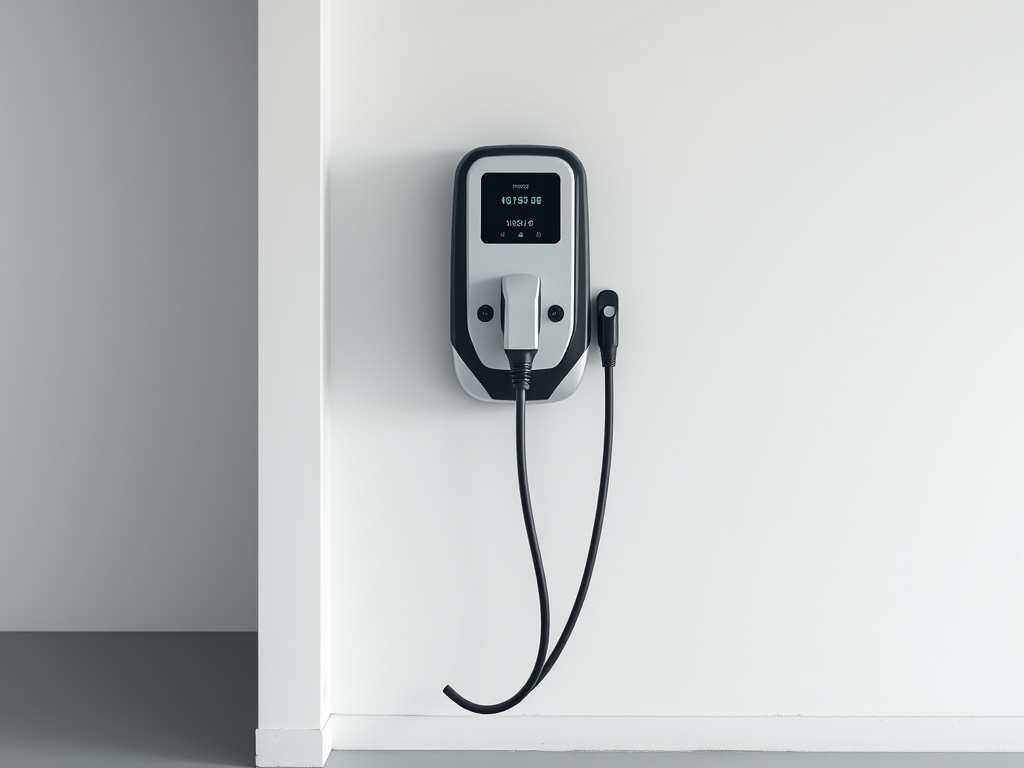
What actually separates Emporia from ChargePoint
Emporia sells two Level 2 home chargers, the Classic and the Pro. Both are listed with a 25-foot cable, up to 48A hardwired, a choice of NEMA plug or hardwire installation, and a 3-year warranty. [1] The Pro adds PowerSmart, which Emporia says adjusts charging to what the electrical panel can handle. [1] Emporia says the Classic was named Best Smart EV Home Charger by MotorTrend and reports 98.9% field reliability for its charging. [1] It also says the Pro brings additional energy management features beyond charging. [1]
ChargePoint’s home product is the Home Flex, which ChargePoint describes as a fast, flexible Level 2 home charger for any EV, including Tesla. [2] Most of the company sits elsewhere: AC stations such as the CP6000, DC fast charging with the Express 280 (up to 80 kW on its own, or 160 kW when paired) and the Express Plus (up to 500 kW per port), plus a software platform for managing stations, roaming partners and a driver app. [2]
That is the practical split. Emporia’s charger is the product; ChargePoint’s charger is a doorway into a charging ecosystem that also covers workplaces, multifamily buildings, fleets and public sites. [2] If you only ever charge in your own garage, the ecosystem matters less. If you manage charging for other people, or want the same account and app across home and work, it matters more.
Does Emporia handle a small electrical panel better?
This is Emporia’s main argument. According to Emporia, about half of US homes need a complete electrical panel upgrade before a Level 2 EV charger can be installed safely, and its PowerSmart feature is designed to let you avoid that upgrade. [1] Load management means the charger throttles itself to stay within what the panel can supply, rather than asking the panel to feed the charger and the rest of the house at full draw at the same time. [1]
Level 2 charging runs on 240V, which most American homes already have, while Level 1 uses ordinary 120V and Level 3 uses 400V to 800V and is not practical for home installation. [3] Because Level 2 is the realistic home option, panel capacity is the constraint most households will hit, not voltage availability.
Before ordering anything, have an electrician look at your service panel and tell you what continuous load it can support. That conversation will tell you more than any spec sheet whether you need a load-managing charger like the Emporia Pro or whether a plain 40A or 48A unit will do. Emporia’s own sizing quiz is a starting point, not a substitute for the electrician. [1]
How Emporia compares with Tesla, Grizzl-E and Wallbox on power
The EPA’s ENERGY STAR listing of certified AC EV chargers is the easiest apples-to-apples place to compare output and standby draw, because every entry is measured the same way. The results page shown lists 478 certified models, sorted by no-vehicle-mode input power. [4] Among the entries:
- A Tesla unit listed as model 1937825-XX-X is rated at 7.68 kW maximum output and carries a “portable” feature flag, with idle-mode input power listed at 2.52 W. [4]
- The Grizzl-E Classic, model GR1-14-24-PB, is rated at 9.60 kW maximum output, with idle-mode input power listed at 3.44 W. [4]
- The Wallbox Pulsar Plus NA, model PUP2-U-1-6-C-002, is rated at 11.52 kW maximum output, is flagged network-protocol capable, and lists idle-mode input power at 14.18 W. [4]
For comparison, Emporia rates its chargers at up to 48A when hardwired. [1] Amperage and kilowatts are not the same unit, so check the kW figure for the exact model you are considering rather than assuming one unit is faster from the amp rating alone.
The standby column is worth a look on an energy-saving site: it is the power the unit draws when no car is plugged in, and it adds up over years of being permanently wired to your panel. [4]
Will the charger plug into your car?
Home charging is AC, and the car’s onboard charger converts it to DC for the battery; DC fast stations do that conversion in the station instead. [5] Connector standards differ by region, and they include SAE J1772 and IEC 62196, CCS, CHAdeMO, and Tesla’s North American Charging Standard, which Tesla developed itself. [5]
In practice, most home chargers use the universal J1772 connector unless you own a Tesla, which uses its own connector and needs an adapter to accept a J1772 charger. [3] ChargePoint says the Home Flex suits any EV, including Tesla. [2] Lenz sells a NACS Supercharger to CCS1 adapter for CCS1 vehicles that want access to Tesla’s Supercharger network. [6] Note that this is a DC fast-charging accessory, separate from whatever you install on your garage wall.
Tesla also publishes ENERGY STAR-listed portable charging equipment rated at 7.68 kW, which is a different product category from a wall-mounted Level 2 unit. [4]
The options side by side
| Brand | What they offer | Worth knowing |
|---|---|---|
| Emporia | Two Level 2 home chargers, Classic and Pro, listed with a 25-foot cable, up to 48A hardwired, plug or hardwire installation and a 3-year warranty; the Pro adds PowerSmart load management. [1] | Emporia cites a MotorTrend Best Smart EV Home Charger nod for the Classic and 98.9% field reliability, and says about half of US homes would otherwise need a panel upgrade. [1] |
| ChargePoint | The Home Flex Level 2 home charger for any EV including Tesla, plus commercial AC (CP6000) and DC fast stations (Express 280, Express Plus) and station-management software. [2] | The home charger is one product in a business built around public, workplace, fleet and multifamily charging, with a station map and roaming partners. [2] |
| Lenz Charging | Level 2 home charging such as the W401, which pulls AC from a 240V outlet or the home’s electrical system, plus accessories such as a NACS Supercharger to CCS1 adapter. [3][6] | Lenz says its charging products and accessories are always safety certified and that it runs a US-based customer support team. [6] |
Which option fits whom
A home with a small or full panel. Emporia’s Pro is the option built around that exact problem, using PowerSmart to adjust charging to panel capacity rather than paying for a service upgrade. [1]
Someone who wants one account across home, work and the road. ChargePoint covers the home charger alongside public, workplace and fleet charging, a station-finding map and roaming partners. [2]
A driver who wants the basics plus adapter options. Lenz pairs Level 2 home charging with adapters and a US-based support team. [3][6]
A Tesla owner who wants more output than a portable unit. The Tesla equipment on the ENERGY STAR list is rated 7.68 kW and flagged portable; the Grizzl-E Classic is listed at 9.60 kW and the Wallbox Pulsar Plus NA at 11.52 kW. [4] Use an adapter or a Tesla-compatible model, and confirm the connector before buying. [3]
A smart-home tinkerer. A network-protocol-capable charger like the Wallbox Pulsar Plus NA is the type to look at if you want charging data to flow into a home energy setup. [4]
A household in a utility program. At least one municipal utility, Ipswich in Massachusetts, lists both ChargePoint and Emporia as qualifying EV charger brands in its Connected Homes program, which rewards letting the utility manage devices during peak events. [7] Check your own utility’s device list before you buy, because a qualifying model can matter more than a small spec difference.
What to check before you order
- Find the exact model in the ENERGY STAR certified listing and note its maximum output and idle draw. [4]
- Confirm the connector matches your car, or that the right adapter is available. [3]
- Have an electrician confirm panel capacity and whether load management is needed. [1]
- Check your utility’s connected-device list for eligible charger brands. [7]
- Confirm the model, shipping and warranty terms on the brand’s own site, since lineups change.
Availability is worth confirming directly: check whether each brand ships to your region and which models are current there. None of the specs above tells you how a charger will feel in daily use, so let the electrical facts — panel capacity, connector, output and standby draw — make the decision.
Sources
- emporia official site — shop.emporiaenergy.com
- chargepoint official site — chargepoint.com
- Lenz Charging official site: Title: EV charging accessories: Your ultimate guide to an EV — lenzcharging.com
- Title: Electric Vehicle Chargers AC Results | EPA ENERGY STAR — energystar.gov
- Charging station (Wikipedia) — Wikipedia
- Lenz Charging official site — lenzcharging.com
- Title: Electric Vehicles | Ipswich, MA — ipswichma.gov
How we put this together: we compared these options using each brand's published product and policy pages and the references listed above. We haven't tested the products ourselves, and details such as prices and policies can change, so check the brand's site before you buy.