
The right Anker Solix solar generator is the smallest one that covers the watts you need and the hours you need them to run. Anker Solix splits its lineup by job: the S2000 and F3000 for essential backup, the F3800 Plus when you need 240V for a home air conditioner or fridge, the S5000 for the most portable capacity, and the E10 for whole-home backup that switches over on its own. [1] Sizing comes before model names.
Why sizing comes before model names
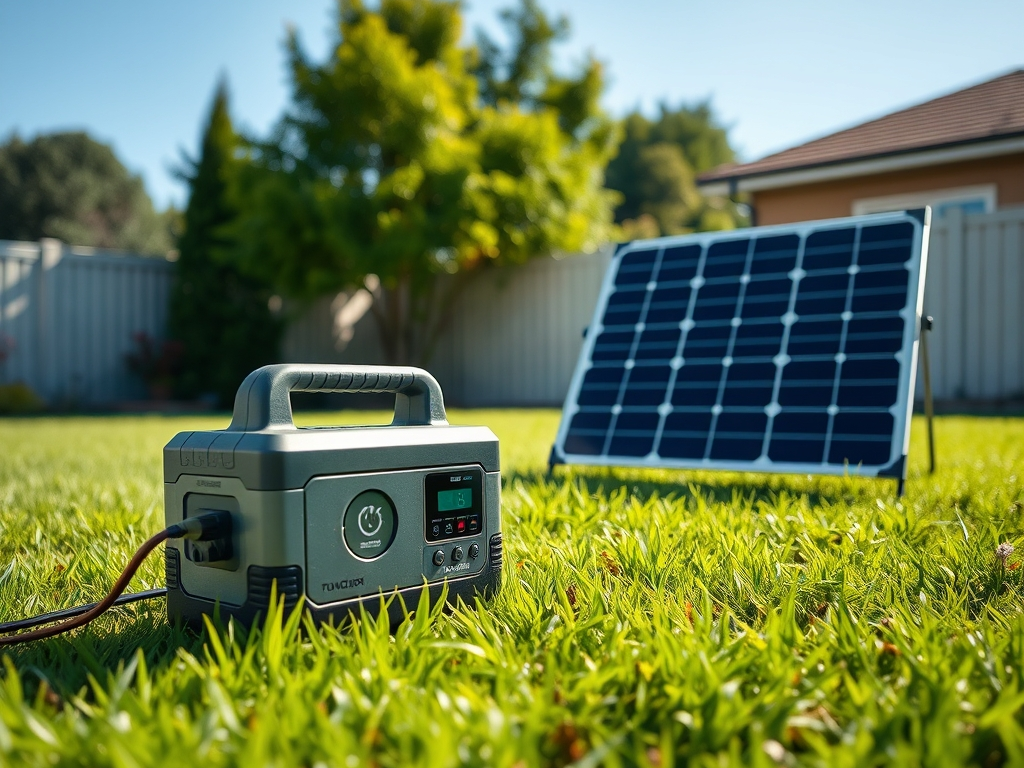
A solar generator is a battery pack, a charge controller, an inverter and solar panels working as one unit — the panels capture sunlight, the controller regulates the flow, the battery stores it (usually lithium-ion or lithium iron phosphate) and the inverter turns stored DC into standard AC for your appliances. [2] These units are used for residential backup during grid outages, for camping and RVing, and in places with no grid access. [2]
Two numbers decide which unit you need:
- Capacity (Wh or kWh) sets how long things run. A fridge and a few lights for an evening is a different ask from multi-day whole-home backup.
- Output (W) sets what can run at the same time, and whether you get 120V only or also 240V.
Anker Solix’s F3800 Plus is sold on 240V plug-and-play power for home AC and fridge, which is the category to look at if central or window air conditioning is on your outage list. [1] The company’s essential-backup setup uses a manually activated transfer switch so its portable power stations can keep whole-home lighting, extended refrigeration and window AC running during blackouts. [1]
Expandability matters as much as the starting capacity. Anker Solix lists an S5000 paired with an expansion battery, and an S5000 with expansion battery plus a 400W solar panel. [1] EcoFlow’s DELTA Pro 3 is described as expandable from 4 to 48 kWh with both 120V and 240V outputs and up to 4000W in a single unit. [3] If you expect to add capacity later, check that the model you pick accepts expansion batteries.
One more habit worth keeping: motors draw more at the moment they start than while running, so compare your appliance’s startup draw, not just its running watts, against the unit’s output rating.
What Anker Solix sells, by job
Anker Solix is the sub-brand Anker uses for residential and portable energy products, covering home energy storage, portable power stations and balcony solar systems. [4]
- S2000 — a 2 kWh portable power station the brand describes as offering up to 35 hours of fridge backup. [1]
- F3000 — positioned as essential home backup for lights and gadgets during storms. [1]
- F3800 Plus — 240V plug-and-play power for home AC and fridge, which the brand calls its most accessible whole-home backup option. [1]
- S5000 — a 5 kWh portable power station that Anker Solix says is certified to UL9540 and UL9540A. [1]
- E10 — a whole-home backup system that monitors severe weather, auto-charges from solar and grid, switches to backup during outages, and balances power across up to 12 circuits. [1] Anker launched the E10 as a modular whole-home backup system for the U.S. market; the unit’s storage can be expanded from 6 kWh to 90 kWh, and it supports solar charging plus an optional tri-fuel generator. [4]
The site also carries a backup time calculator that lets you select the appliances you want to keep running and match them to a storage size. [1] That is a more useful first step than starting from a model name, because it converts your appliance list into a capacity figure.
Does an Anker Solix solar generator kit include panels?
Not necessarily, and this is the most common source of confusion. A solar generator without the ability to charge from solar is properly a portable power station — it charges from a wall outlet, a car socket or a car fast charger instead. [2] Anker Solix sells both configurations: the S5000 portable power station on its own, and bundles that add a 400W bifacial solar panel, with or without an expansion battery. [1]
So decide two things separately: the station size you need, and whether you want panels for off-grid recharging. If your plan is to wheel the unit out during a storm and plug it into the wall beforehand, the station alone covers it. If you want to recharge during an extended outage without grid power, budget for the panel bundle.
How Anker Solix, Jackery and EcoFlow differ
| Brand | What they offer | Worth knowing |
|---|---|---|
| Anker Solix | Portable power stations from the 2 kWh S2000 with up to 35 hours of fridge backup, through the 240V F3800 Plus, to the 5 kWh S5000 certified to UL9540 and UL9540A, plus the E10 whole-home system that balances up to 12 circuits [1] | The E10 is a modular whole-home backup system that Anker Solix says auto-charges from solar and grid and switches over during outages [4][1]. Anker Solix states its products are available in 146 countries — check availability in your region before ordering [1] |
| Jackery | Solar generators from the 288Wh 300 Plus with a LiFePO4 battery up to the 5040Wh / 7200W Solar Generator 5000 Plus with 120V/240V output, with HomePower models at 1024Wh, 2048Wh, 3072Wh and 3584Wh in between [5] | Jackery lists 30-day returns, free warranty return and up to 5 years free warranty on its site [5]. Check whether it ships to your region before ordering [5] |
| EcoFlow | DELTA series from the 1 kWh DELTA 3 Classic and 1800W DELTA 3 Plus up to the 6–90 kWh DELTA Pro Ultra, which the brand says is certified to both UL1973 and UL9540, plus RIVER and TITAN series [3] | The site states no shipment to outlying areas including Puerto Rico, Hawaii and Alaska [3]. Returns are accepted on US orders within 30 days of receiving, with transaction and shipping costs deducted [6] |
Which option fits whom
Renters and apartment dwellers. You want lights, a router, phones and a fridge for an evening. A smaller station is the match — Anker Solix says its S2000 is rated for up to 35 hours of fridge backup. [1] Jackery lists the 1000 v2 and HomePower 1000 v2 in the 1 kWh class. [5] Nothing here needs a transfer switch.
Homeowners with a window AC or a well pump. Look at 240V. The Anker Solix F3800 Plus is built around 240V plug-and-play for home AC and fridge [1], and Jackery’s 5000 Plus offers 120V/240V output [5]. EcoFlow’s DELTA Pro 3 delivers both 120V and 240V from a single unit [3].
Anyone planning for multi-day outages. Capacity and expansion matter more than portability. Compare Anker Solix’s S5000 with expansion battery [1] against EcoFlow’s DELTA Pro Ultra at 6–90 kWh [3] and Jackery’s HomePower 3600 Plus at 3584Wh [5].
Whole-home backup with automatic switchover. The Anker Solix E10 is the option that switches over without you doing anything, and it balances up to 12 circuits. [1]
Camping, RV and tailgating. Prioritize weight and a panel bundle. Among Jackery’s listed solar generators, the Solar Generator 300 Plus has a 288Wh LiFePO4 battery, and Anker Solix lists an S5000 bundle with a 400W bifacial solar panel [5][1].
Buying for a home where you may later add solar. Check solar input and expansion, not just the sticker capacity. Anker Solix’s E10 supports solar charging and an optional tri-fuel generator [4], and EcoFlow lists a 40kW solar input on its OCEAN Pro system [3].
Before you order
Confirm three things on the brand’s site: whether the model you want ships to your address, what the return window and warranty length are, and whether the panels are included or sold separately. Anker Solix’s site presents the S5000 both as a standalone station and in panel bundles, so the same model name can appear at different levels of completeness. [1] Jackery publishes a 30-day return window and up to 5 years of free warranty [5], and EcoFlow’s return policy covers US orders within 30 days of receipt with costs deducted [6] — worth reading before a large purchase, since these units are heavy to ship back.
Finally, be skeptical of any single “best” label, including the ones in brand headlines. Match capacity to your appliance list, match output and voltage to the biggest load you care about, and confirm the current specs, regional availability and shipping details on the brand’s own site before you buy.
Sources
- Anker Solix official site — ankersolix.com
- Solar generator (Wikipedia) — Wikipedia
- EcoFlow official site — ecoflow.com
- Title: Anker — en.wikipedia.org
- Jackery official site — ca.jackery.com
- EcoFlow: Return & Refund Policy — us.ecoflow.com
How we put this together: we compared these options using each brand's published product and policy pages and the references listed above. We haven't tested the products ourselves, and details such as prices and policies can change, so check the brand's site before you buy.