
A home battery backup system is a rechargeable battery — usually lithium-ion — that stores electricity at your house and releases it to your home’s circuits when the grid goes down. It charges from the grid or from rooftop solar, and an inverter plus a transfer switch or smart panel turn that stored DC power into usable AC power for lights, refrigeration, Wi-Fi and, in larger setups, heating and cooling equipment. [1][2]
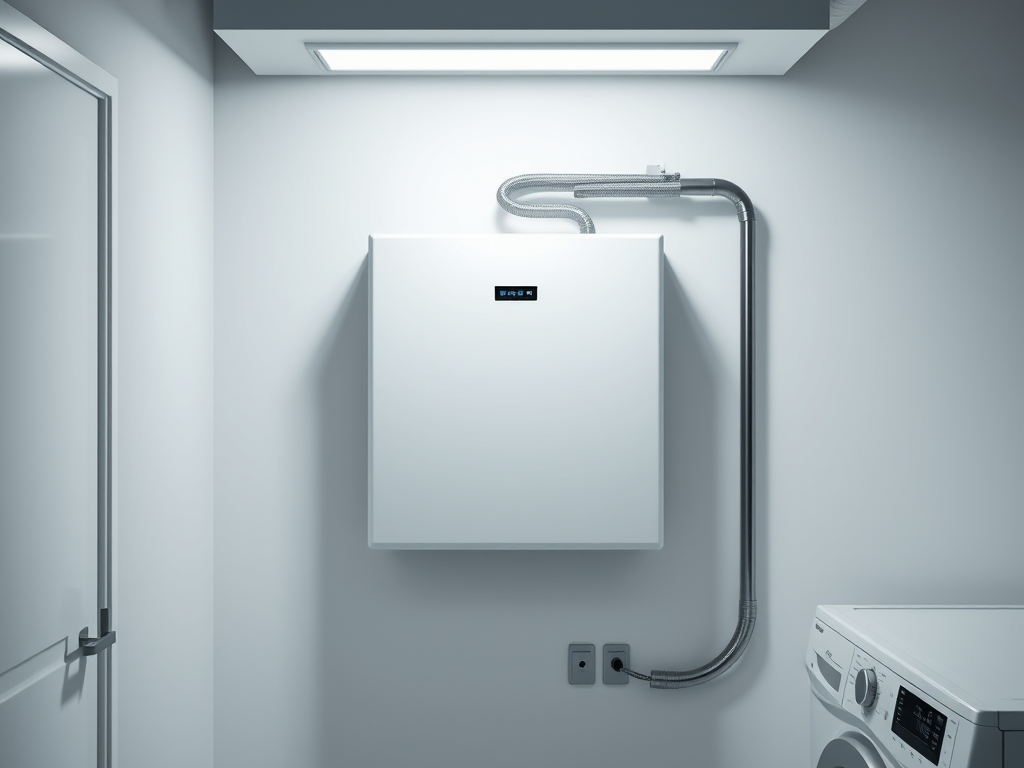
How does a home battery backup system deliver power during an outage?
Three parts do the work, and it helps to know which ones you are buying.
The battery holds the energy. Most home systems use lithium-ion cells managed by software that handles the charging and discharging cycles. [1] The stored energy commonly starts as DC electricity from rooftop solar, which can either be sent to the grid through a solar inverter or kept in the battery for later use. [1]
The inverter converts that stored DC battery power into AC electricity for your house. Some batteries include an inverter, others need one separately, and it has to be sized for peak wattage — the maximum power your devices may draw at once. [2]
The transfer switch or smart panel is what actually delivers the power safely to your circuits. Manual switches give you control; smart panels automate the switchover and prioritize critical loads such as HVAC or medical devices. [2] EcoFlow says its battery systems activate automatically when the grid goes down. [2]
That is the whole trick: the battery sits charged, the inverter makes house-ready power, and the switch decides which circuits get it. In a well-matched setup, the stored energy keeps essential lighting, heating, computing and home medical equipment running without interruption. [1]
What is whole home battery backup, and how is it different from an essentials setup?
An essentials-only system covers a short list: the refrigerator, lighting, Wi-Fi and any medical devices, with wattage added up device by device. [2] It is the simpler path and the one most people start with.
Whole home battery backup is sized to carry large loads as well, including central air conditioning, and typically needs a smart panel or a more capable transfer switch to manage those circuits. [2] Capacity and output are quoted in ranges rather than single figures, because modular systems let you start small and add batteries as your household or usage grows. [2][3]
There is also a middle path: a large portable power station wired through a transfer switch to back up selected circuits, which is how Anker SOLIX describes its essential backup setup. [4]
How much battery capacity does a home actually need?
The arithmetic is simple even if the answer is not. List the devices you want to keep running, then multiply wattage by hours used per day to get daily watt-hours. [2]
EcoFlow’s guide works through it: a refrigerator drawing 150W for 24 hours uses 3,600Wh, or 3.6 kWh; add a router at 0.2 kWh and lighting at 2.0 kWh and you are at about 5.8 kWh per day. Add a microwave or television and usage can climb to 8 or 9 kWh depending on habits. [2] The brand recommends planning above your baseline — if essentials need 9 kWh, target 10 to 12 kWh to cover power surges, conversion losses and usage fluctuations. [2]
Two numbers matter, not one. Capacity in kWh tells you how long the system can run; output in kW tells you how much it can run at the same time. Product lines are typically listed as a capacity range and an output range side by side for exactly that reason. [3]
As an approximate baseline, EcoFlow says a home of about 1,200 sq ft with two or three residents could start with a single battery for the fridge and Wi-Fi, and a setup may begin near 6 kWh and grow to 18 kWh with extra batteries. [2]
What else can a home battery do besides cover outages?
Quite a lot, which is why the payback case is not only about storms.
- Shift cheap hours. A battery can be programmed to charge during low-demand, lower-priced hours and discharge when power costs more, and smart tariffs paired with smart meters are increasingly used the same way. [1]
- Use more of your own solar. Storing daytime solar generation to use after sundown offsets evening consumption instead of exporting everything to the grid. [1]
- Reduce reliance on fossil fuels. By boosting the share of on-site solar consumed at home, storage cuts the power generated from natural gas, coal, oil and diesel. [1]
- Support the grid. Internet-connected systems can theoretically provide very short-term services such as demand response during peak periods and frequency correction. [1]
One caveat worth knowing before you buy: lithium-ion batteries, popular for their charge cycles and lack of memory effect, are difficult to recycle, while lead-acid batteries are relatively easier to recycle thanks to the resale value of the lead. [1] Smaller flow battery technology for home use is also in development. [1]
Before you buy: certifications, switches and returns
Matches are lost on details rather than headline capacity, so check these first.
Safety certification. Anker SOLIX lists its S5000 portable power station as certified to UL9540 and UL9540A. [4] EcoFlow describes the DELTA Pro Ultra as certified to both UL1973 and UL9540. [3] Ask any brand for the certification listings on the exact model you are considering.
What else is in the box. Some batteries include an inverter; others require one separately, and you still need a transfer switch or smart panel to deliver power to your home. [2] Plan the electrical work as part of the project, not as an afterthought.
Return terms. EcoFlow accepts returns of complete items in original packaging within 30 days of receipt, with return service currently available for US orders only. [5]
Sizing buffer. A system matched exactly to your baseline leaves no room for surges or a longer outage. [2]
The options side by side
| Brand | What they offer | Worth knowing |
|---|---|---|
| EcoFlow | Whole-home and portable battery backup: the DELTA Pro Ultra is listed at 6–90 kWh capacity and 7.2–21.6 kW output, the DELTA Pro 3 at 4–48 kWh with 4 kW output and both 120V and 240V outlets, and the DELTA 3 Plus at 1–5 kWh with 1,800W output; the Smart Home Panel adds circuit-level management. [2][3] | The brand says its batteries activate automatically when the grid goes down [2]; returns are accepted within 30 days of receipt on US orders only, in original packaging [5]. |
| Anker SOLIX | A portable-first lineup plus a whole-home option: the S5000 is a 5 kWh portable power station certified to UL9540 and UL9540A, the S2000 is rated for up to 35 hours of fridge backup, the F3800 Plus offers 240V plug-and-play power for home AC and a fridge, and the E10 whole-home system balances power across up to 12 circuits and auto-charges from solar and grid. [4] | Anker SOLIX says the E10 monitors severe weather and switches to backup during outages, while the essentials setup uses a manually activated transfer switch [4]. Check availability in your region before ordering. |
| LiTime | LiFePO4 lithium batteries in 12V, 16V, 24V, 36V and 48V versions, including self-heating, low-temperature, Bluetooth and mini models, plus chargers and accessories. [6] | The catalog is built around batteries, chargers and accessories rather than packaged home backup systems, so an inverter, transfer switch and installation are separate decisions [6]; LiTime publishes a returns and warranty policy [7]. |
Which option fits whom
You want a packaged whole-home system with room to grow. EcoFlow is one to study first: its line includes a 1–5 kWh portable unit and whole-home configurations listed up to 180 kWh, with a smart panel for circuit-level control. [2][3] Check the return terms before ordering, since the US return window is 30 days from receipt. [5]
You want to start portable and add backup circuits later. Anker SOLIX splits the difference — portable stations that can run a fridge or window AC, an F3800 Plus with 240V output for home AC, and the E10 for whole-home circuits with automatic switchover. [4] Confirm with the brand that it serves your region before you order.
You are building the battery bank yourself, or backing up a cabin, RV or existing inverter. LiTime’s 12V-to-48V LiFePO4 lineup, including self-heating and low-temperature versions, is the component route. [6] Remember that batteries alone are not a backup system: without an inverter and a transfer switch, there is nothing to convert the stored power or route it to your circuits. [2]
Whichever direction you take, confirm current capacity, output, certification and return details with the brand before you commit.
Sources
- Home energy storage (Wikipedia) — Wikipedia
- EcoFlow official site: Title: How to Set Up a Whole-House Battery Backup Without Br — ecoflow.com
- EcoFlow official site — ecoflow.com
- Anker SOLIX official site — ankersolix.com
- EcoFlow: Return & Refund Policy — us.ecoflow.com
- LiTime official site — ca.litime.com
- LiTime: Returns & Warranty Policy — ca.litime.com
How we put this together: we compared these options using each brand's published product and policy pages and the references listed above. We haven't tested the products ourselves, and details such as prices and policies can change, so check the brand's site before you buy.