
Is a smart thermostat worth it? For many homes with central heating and cooling, yes—if you will use the app, schedules, and automatic adjustments. Certified models are independently shown to reduce heating and cooling runtime, and the average ENERGY STAR smart thermostat saves about 8% of heating and cooling bills. [1] It is a weaker buy if your routine is already simple or you tend to override every automatic change.
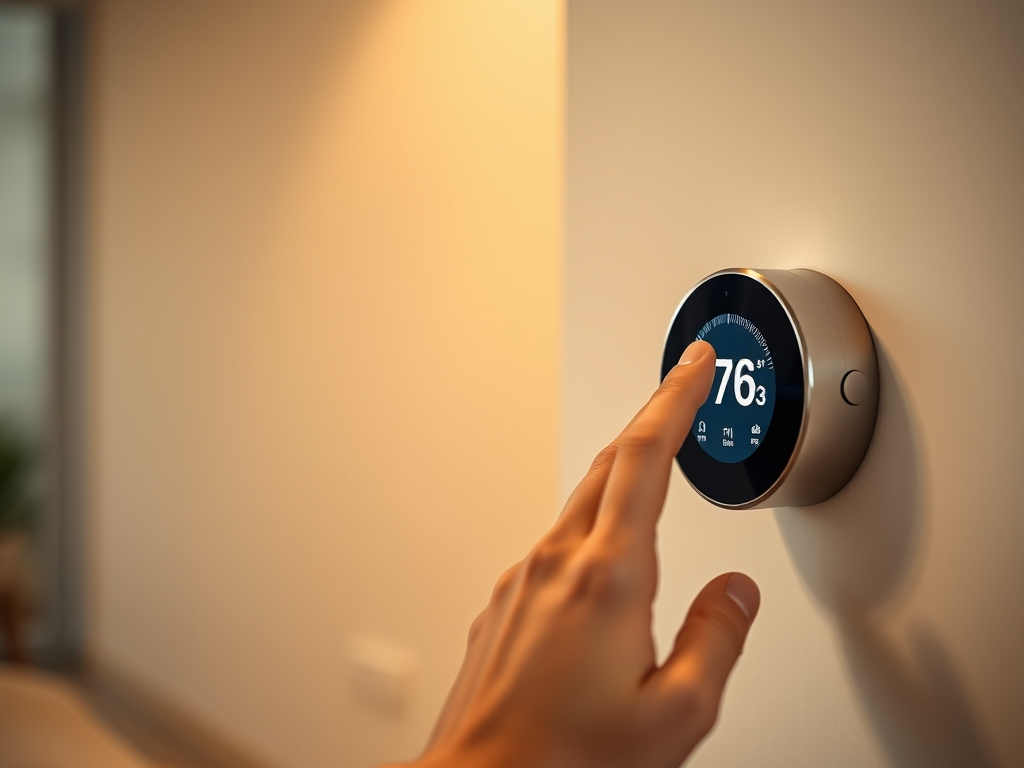
What a smart thermostat actually does
A smart thermostat is a Wi-Fi thermostat that controls a home’s heating, ventilation, and air conditioning. [2] It lets you set a schedule and adjust the temperature from internet-connected devices such as a laptop or a smartphone. [2] It can also record indoor and outdoor temperatures and how long the HVAC system has run, and it can notify you when the air filter needs replacing. [2]
The point is not just remote control. Smart thermostats are designed to reduce the problems that made programmable thermostats disappointing: people programmed them incorrectly or turned the schedule off. [2] A smart thermostat tries to take the user out of the picture and rely more on sensors and software. [2]
When the savings are real — and when they aren’t
The strongest savings case comes from certification. To earn the ENERGY STAR label, smart thermostat service providers must collect a full year of anonymized, aggregated real-world data from customers’ homes. [3] The criteria include annual runtime reductions: at least 8% for heating and at least 10% for cooling on the weighted national average, with lower thresholds at the 20th percentile. [1] On average, savings are about 8% of heating and cooling bills, and they may be greater or smaller depending on climate, comfort preferences, occupancy, and HVAC equipment. [1]
Heating and cooling is almost half the annual energy bill for the average American household, so even a modest percentage change matters. [3] Programmable thermostats show the risk. In a Florida Power & Light study of 400 homeowners, 56% used the programming feature; those who used it consumed 12% more energy than non-programmers because of confusion with schedule settings. [2] A separate online survey found 89% of respondents did not use the schedule feature on their programmable thermostat. [2] That is why the value of a smart thermostat depends heavily on whether you let it automate. If you treat it like a manual thermostat and constantly override it, the savings case weakens.
Owner reports on Reddit and forums are best used for spotting installation quirks, app complaints, and compatibility warnings, not for estimating your savings. Two houses with the same thermostat can get different results because climate, occupancy, and HVAC equipment differ. [1]
What to check before you buy
Check compatibility with your HVAC system before buying. A thermostat only saves energy if it can control your equipment properly, and heat pumps or unusual wiring can require specific support.
Look for ENERGY STAR certification if savings are the reason you are buying. According to ENERGY STAR, only thermostats that earn its label are independently certified to save energy based on real-world field data. [3]
Check the app and integrations you will actually use. A thermostat that works with your phone but not your preferred smart-home system may be more annoying than useful. Also ask about data privacy: ENERGY STAR says customers should consult their smart thermostat provider about data security and privacy. [1]
Look at utility or ENERGY STAR rebate listings before you choose a model. ENERGY STAR’s smart thermostat page includes a Rebate Finder. [3]
How to tell whether you already have a smart thermostat
If you can change the temperature from a phone app and the thermostat connects to your home Wi-Fi, it is a smart thermostat. [2]
Do smart thermostats increase home value?
A smart thermostat is a small smart-home feature, not a renovation. Whether it affects resale value depends on your local market and whether buyers care about connected devices. Ask a local real estate agent or appraiser how much weight such features carry in your area. Do not count on a thermostat to raise an appraisal.
Are smart thermostats reliable?
Reliability is mostly about installation, Wi-Fi, and software support. ENERGY STAR device criteria include static temperature accuracy within ±2.0°F and network standby average power of 3.0 W or less, with entry into standby within 5 minutes after user interaction. [1] Those are performance requirements, not a guarantee against app outages or wiring problems. Check the manufacturer’s warranty and support terms before buying, and confirm what happens during an internet outage.
Do you need a particular brand?
You do not need a Nest thermostat or any specific brand. The useful questions are whether the model is compatible with your HVAC, whether it has the controls you will actually use, and whether it is certified for savings if savings are your main goal. [3] Brand matters less than fit. If your current thermostat works and you do not use schedules, a new model may not change your bills.
One brand to consider: ecobee
ecobee lists three smart thermostats: Smart Thermostat Premium, Smart Thermostat Enhanced, and Smart Thermostat Essential. [4] ecobee describes Premium as its most advanced model, with a SmartSensor and air quality monitor, Enhanced as adjusting automatically as you come and go, and Essential as making scheduling simple. [4] ecobee says its thermostats can be controlled from a smartphone, tablet, or Apple Watch and work with Apple Home, Amazon Alexa, Google Assistant, and Samsung SmartThings. [4]
| Brand | What they offer | Worth knowing |
|---|---|---|
| ecobee | Three Wi-Fi smart thermostats: Premium with a SmartSensor and indoor air quality monitor, Enhanced that adjusts as you come and go, and Essential for simple scheduling; app and Apple Watch control; Apple Home, Amazon Alexa, Google Assistant, and Samsung SmartThings integrations. [4] | ecobee claims savings of up to 26% on annual heating and cooling costs compared with holding 72°F for Premium and Enhanced, and up to 23% for Essential; some features require an ecobee Smart Security subscription or a separately sold sensor. [4] |
Check whether the model you want is sold in your region and compatible with your system before buying.
Which option fits whom
Match the model to the way you will actually use it, not to the longest feature list.
- You want the simplest path to scheduling and app control: ecobee Essential is the entry model in the lineup and is described as making scheduling simple. [4]
- You want the thermostat to adjust automatically when the house is empty or occupied: ecobee Enhanced is described as adjusting as you come and go. [4]
- You want room sensing and air quality monitoring: ecobee Premium includes a SmartSensor and an indoor air quality monitor. [4]
- You have a heat pump or complex HVAC setup: check compatibility with the specific model before buying, regardless of brand. A thermostat cannot deliver savings if it is not installed correctly for your equipment. [1]
- You are a renter or will not use automation: a smart thermostat may not be worth it. A basic thermostat or a landlord-approved programmable model may be enough. [2]
- You care about a particular smart-home ecosystem: ecobee says its thermostats work with Apple Home, Amazon Alexa, Google Assistant, and Samsung SmartThings. [4]
Before buying, confirm current model details, HVAC compatibility, warranty terms, and availability on the brand’s site. The best thermostat is the one you will set up correctly and leave alone enough to let it work.
Sources
- Title: ENERGY STAR Smart Thermostats FAQs for EEPS — energystar.gov
- Smart thermostat (Wikipedia) — Wikipedia
- Title: Smart Thermostats — energystar.gov
- ecobee official site — ecobee.com
How we put this together: we compared these options using each brand's published product and policy pages and the references listed above. We haven't tested the products ourselves, and details such as prices and policies can change, so check the brand's site before you buy.