
A solar generator is a portable unit that holds a battery, a way to connect a charging source, and an inverter that turns stored DC power into AC power for standard appliances. [1] In practice, the solar panels are part of the kit rather than the box: sunlight charges the battery, the battery runs your devices, and a wall outlet or car socket can usually top it up too. [1]
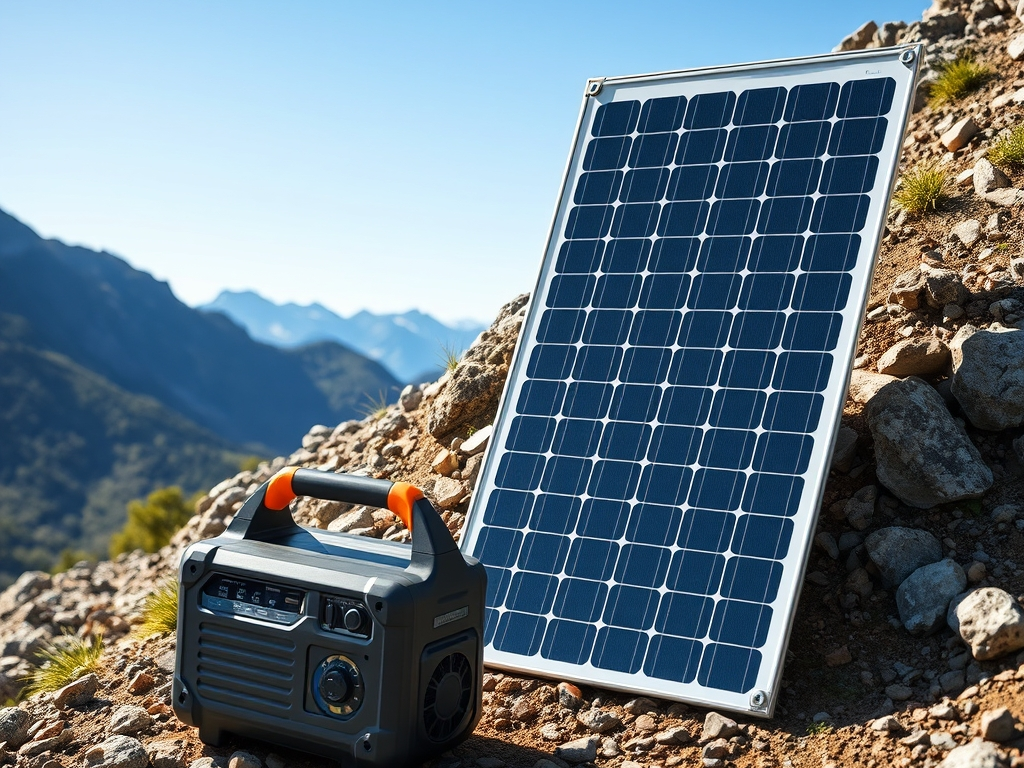
How does a solar generator work?
A typical system has four parts, and each one does a distinct job.
- Solar panels capture sunlight and convert it into electricity using photovoltaic cells, which produce direct current. [1][2]
- A charge controller regulates the voltage and current coming in from the panels. [1]
- A battery, usually lithium-ion or lithium iron phosphate (LiFePO4), stores the energy. [1]
- An inverter converts the stored direct current into alternating current so ordinary appliances can run. [1]
That last step is why a solar generator behaves like a wall outlet. Panels and batteries work in DC; most household devices expect AC. The inverter bridges the two, and the charge controller protects the battery from whatever the panels send down the line. [1]
Charging is not limited to sunshine. Portable units in this class can also be charged from a power brick, a cigarette socket, or a car fast charger wired to the alternator. [1]
What is a solar generator used for?
Three uses come up again and again. [1]
Residential backup power during grid outages is the one most homeowners care about. Recreational use covers camping, RVing and tailgating. Remote locations covers powering devices where there is no grid access at all. [1]
The consumer product you see marketed today grew out of exactly that mix. Integrated, consumer-grade solar generator systems began appearing in the early 2000s, pitched at camping, RVs and residential backup during outages. [1] The label itself is a marketing term as much as a technical one: these self-contained systems are meant to compete with, or replace, traditional fuel-burning generators, even though technically they are portable photovoltaic power systems with energy storage. [1]
Solar generator, portable power station, or gas generator?
The vocabulary matters when you shop, because two different products get called the same thing.
A solar generator can be charged from solar panels. A unit without the ability to generate electricity from solar is a portable power station — and portable power stations generally have significantly higher input, output and storage capacity than a power bank. [1] So a power station is the battery-and-inverter box; a solar generator is that box plus a solar charging path.
Against a fuel generator, the difference is what you are buying. A fuel unit makes electricity on demand as long as you keep feeding it gasoline or propane. A solar generator stores electricity you collected earlier, which means its runtime is fixed by battery capacity and how much sun you can harvest. [1]
There is also a third category worth knowing about: plug-and-play solar, sometimes called balcony solar, which backfeeds into a regular household wall outlet. These are charged by solar panels and/or grid power. [1] Backfeeding requires council approval, a fixed connection to the grid, metering, centralized control and/or installation by a licensed electrician in some places, and the setup is illegal in many countries and areas. [1] If you are in the US, treat any wall-outlet backfeeding idea as something to confirm with your utility and local code officials before buying hardware.
What is a solar generator good for at home?
For most US households, the honest answer is: the essentials, not the whole house, unless you buy into a much larger class of system.
Two numbers decide what you can run. Output in watts is the ceiling on what can be powered at one moment; capacity in watt-hours is the size of the tank. A unit with a large tank and a small output can run a fridge for hours but cannot start a big motor. A unit with a big output and a small tank can run a heavy load briefly and then needs recharging.
So the practical method is to list what you actually want running during an outage, note the watts each item draws and how many hours you need it, then compare that total against the unit’s output and capacity ratings. Anything with a compressor or a heating element is the hard part.
Two limits apply to every solar setup. Panels depend on the availability and intensity of sunlight, and they require cleaning. [2] Cloudy winter weeks shrink what you can harvest, whatever the battery label says. Solar also carries high initial costs compared with buying electricity from the grid. [2]
Are solar generators worth the money?
Worth it depends on what you are comparing against, and the honest framing is trade-offs rather than a verdict.
They tend to make sense when you want quiet, fume-free power that can be refueled by daylight, and when outages in your area are frequent or long enough that a battery earns its keep. They also make sense when the same unit doubles as camping or RV gear, so one purchase covers two jobs. [1]
They make less sense if your goal is to run central air conditioning for days, if you have nowhere to put panels in the sun, or if you need power restored indefinitely rather than for a defined stretch.
The commercial side of the market has matured, which helps on risk. Jackery states 30-day returns and up to 5 years free warranty on its site, with a free warranty return process. [3] EcoFlow restricts its return service to US orders and accepts returns within 30 days of receiving the items, with a full refund or one-time free replacement for quality issues inside that window. [4] Those policies matter more than a spec sheet when you are spending on a battery you may use twice a year.
Three brands to compare
These three sell into the same category with different product shapes. Specs below are as each brand lists them.
| Brand | What they offer | Worth knowing |
|---|---|---|
| Jackery | Solar generators and portable power stations spanning a 288Wh LiFePO4 unit up to a 5040Wh model rated 7200W with 120V/240V output; separate solar panels, accessories and refurbished units also listed. [3] | The site lists 30-day returns, up to 5 years free warranty and free warranty returns, and its region selector includes a United States option. [3] |
| EcoFlow | Power stations and solar generators across RIVER, DELTA and TITAN series; DELTA Pro 3 lists 4–48kWh capacity, 4kW output and both 120V and 240V outputs. [5] | DELTA Pro Ultra is described by the brand as certified to both UL1973 and UL9540; returns are handled for US orders within 30 days of receipt. [5][4] |
| Anker SOLIX | Portable power stations, solar generators and home battery systems; S2000 is a 2kWh unit the brand says gives up to 35 hours of fridge backup, and S5000 is listed as UL9540 and UL9540A certified. [6] | The brand says its products are available in 146 countries; check whether it ships to the US before ordering. [6] |
Which option fits whom
Renters and apartment dwellers who want lights, phones, a router and a small fridge during an outage are looking at the compact end — the kind of unit Jackery lists at 288Wh, or a mid-size station in the 1–2kWh range such as the ones EcoFlow and Anker SOLIX describe. [3][5][6] Portability and a solar panel you can hang on a balcony or railing matter more than headline capacity here.
Homeowners protecting a fridge, furnace blower or window AC need to look at output as closely as capacity. Anker SOLIX describes its F3800 Plus as 240V plug-and-play power for home AC and a fridge, with a manual transfer switch for essential circuits. [6] EcoFlow’s DELTA Pro 3 lists both 120V and 240V outputs. [5] Jackery’s larger units list 120V/240V output as well. [3]
Anyone thinking about whole-home backup is moving from a portable box to an installed or semi-installed system. Anker SOLIX says its E10 monitors severe weather, auto-charges from solar and grid, and balances power across up to 12 circuits. [6] EcoFlow lists DELTA Pro Ultra with 6–90kWh capacity and 7.2–21.6kW output. [5] At that level, electrical work and permits become part of the project, not just the purchase.
Campers, RVers and tailgaters can weight capacity lower and portability higher, since the load is small and the sun is usually the point of the trip. [1]
Bargain hunters should note that Jackery lists an official refurbished category alongside new stock. [3]
There is no single best solar generator, because the deciding factors are your load list, your sun exposure and whether the unit has a second life outdoors. Confirm current capacities, certifications, warranty terms and regional availability on each brand’s own site before you commit, since listings change with model revisions.
Sources
- Solar generator (Wikipedia) — Wikipedia
- Solar panel (Wikipedia) — Wikipedia
- Jackery official site — ca.jackery.com
- EcoFlow: Return & Refund Policy — us.ecoflow.com
- EcoFlow official site — ecoflow.com
- Anker SOLIX official site — ankersolix.com
How we put this together: we compared these options using each brand's published product and policy pages and the references listed above. We haven't tested the products ourselves, and details such as prices and policies can change, so check the brand's site before you buy.